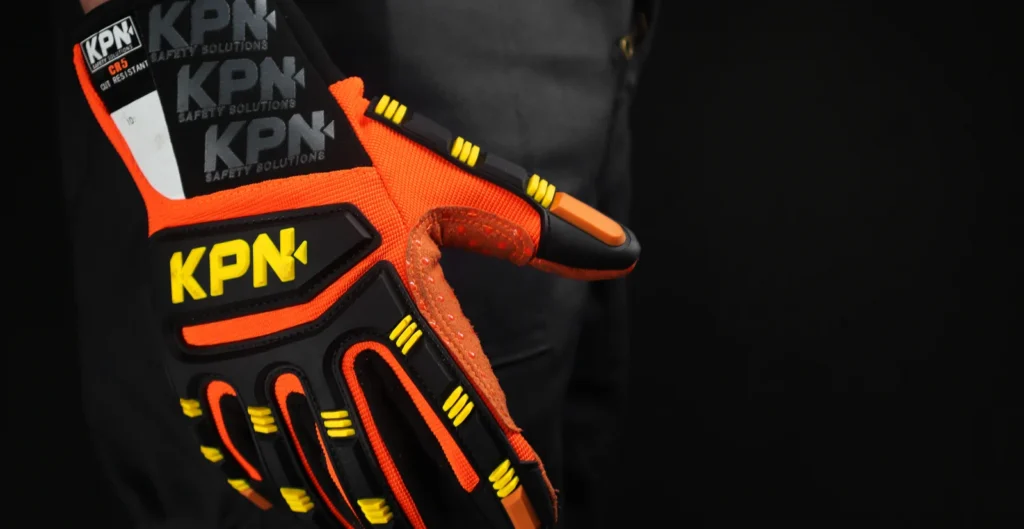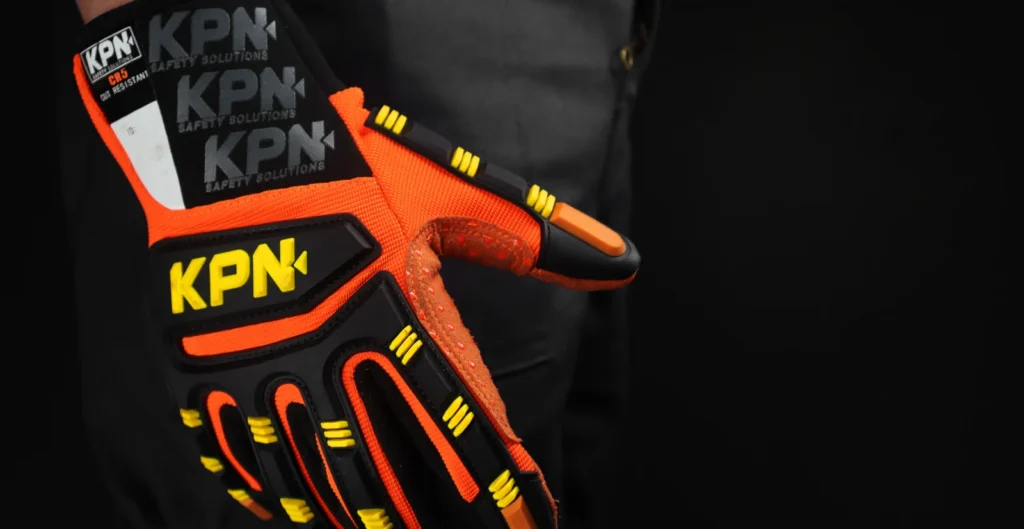
From the Permian Basin in West Texas to the Haynesville Shale in Louisiana, drilling crews put their hands in harm’s way on every connection. Pipe, tongs, wire rope and slips create cut and crush hazards in the same task. That’s why cut and impact resistant gloves have become standard equipment on many rigs. For safety managers, the challenge is choosing a model that protects against both hazards without slowing the work down.
Still, not every glove with an impact pad offers real protection. Here’s what to check before you buy for your crew.
The hand hazards on a drilling rig
Drilling work combines several hazards that a single glove has to handle at once:
- Impact and pinch points: tripping pipe, making up connections and moving tongs expose the back of the hand to crushing blows.
- Cuts: frayed wire rope, metal burrs and sharp threads can slice through ordinary work gloves.
- Slippery surfaces: drilling mud, oil and water reduce grip, which leads to dropped tools and lost control of loads.
- Heat: hot surfaces on equipment, plus long shifts in the Texas and Gulf Coast heat.
OSHA points to moving equipment, falling equipment and high-pressure lines as common sources of struck-by and caught-between incidents in oil and gas extraction. As a result, hand protection on the rig floor has to cover more than abrasion. That is why many crews now specify cut and impact resistant gloves.
Five things to check in cut and impact resistant gloves
When you compare cut and impact resistant gloves, focus on measurable performance first, then on comfort.
- Impact level (ANSI/ISEA 138): the scale runs from Level 1 to Level 3. For drilling, Level 3 offers the highest back-of-hand protection. See our guide to ANSI/ISEA 138 impact levels for details.
- Cut level (ANSI/ISEA 105): cut ratings go from A1 to A9. An A5 glove resists 2,200 to 2,999 grams of cutting force, while an A9 glove resists 6,000 grams or more.
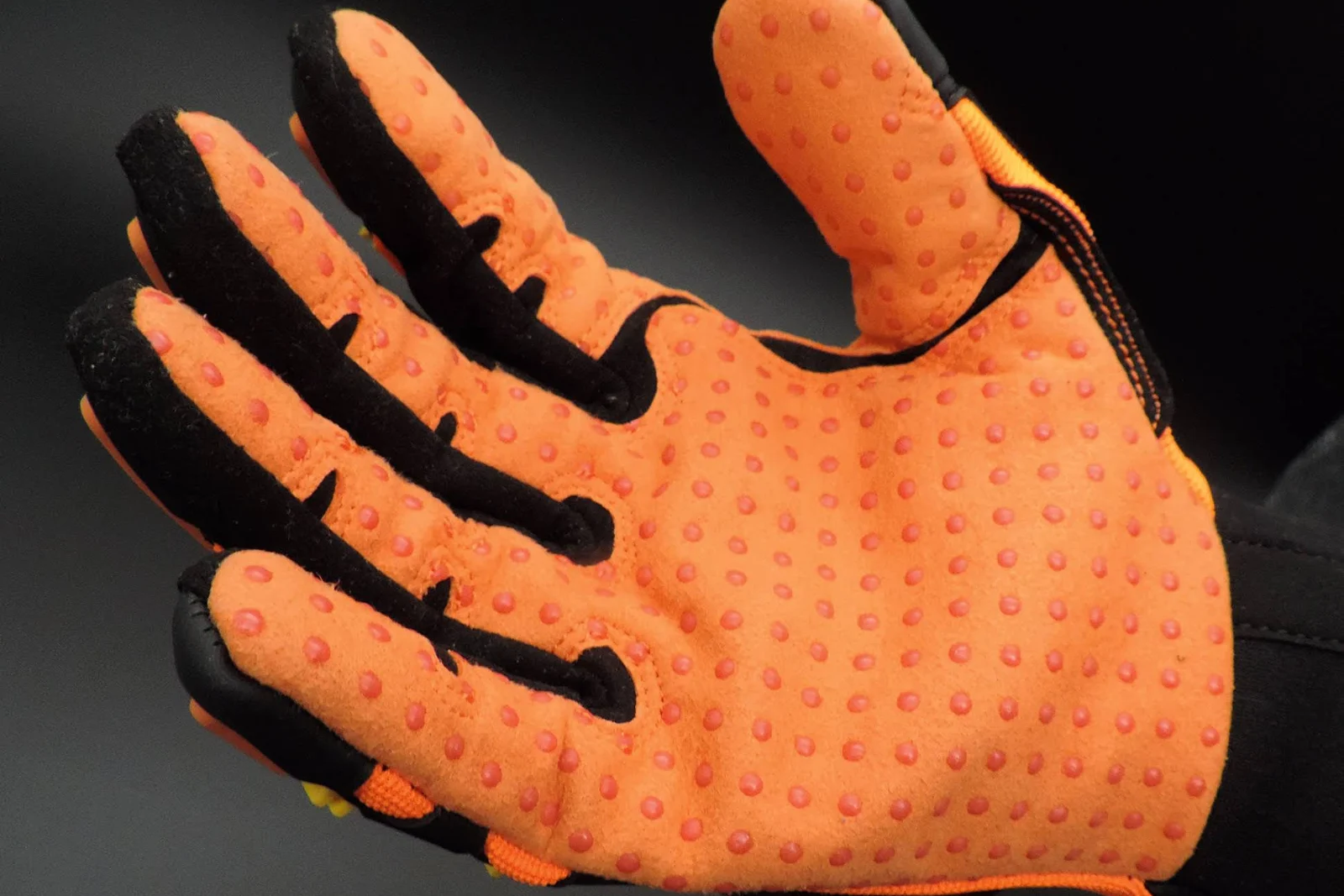
- Grip in wet and oily conditions: look for coatings and treatments built for oil and water, not only for dry handling.
- Fit and dexterity: a glove that is too bulky gets removed when the job needs precision, and the protection disappears.
- Visibility and durability: high-contrast colors help others see hands near moving equipment. A tougher palm also means fewer replacements per worker.
Read the label, not just the product name
Words like “heavy duty” or “impact” mean little on their own. Therefore, check the markings on any cut and impact resistant gloves or their packaging. Gloves rated under ANSI/ISEA 138 carry a pictogram with the impact level, and ANSI/ISEA 105 ratings show the cut level from A1 to A9.
Many gloves sold in the U.S. also show EN 388, the European standard for mechanical risks. It is a useful complement. For example, the KPN CR5 is rated EN 388 4544FP. In that code, the letter F is the top result in the ISO cut test, and the letter P shows that the glove passed the European impact test. However, for U.S. purchasing specs, the ANSI ratings remain the main reference.
Document your glove selection
Choosing the right glove is also a compliance task. OSHA 29 CFR 1910.138 requires employers to select hand protection based on how the glove performs against the hazards of each task. In addition, OSHA 1910.132 requires a workplace hazard assessment, certified in writing.
For EHS and procurement teams, the practical steps are simple:
- list the tasks where cut and impact hazards occur together;
- set a minimum ANSI cut level and impact level for those tasks;
- keep the product’s rating information with your hazard assessment;
- track how often gloves are replaced, so you can compare cost per day of use, not only unit price.
Need cut and impact resistant gloves that meet the top level on both scales? See the KPN CR5 on Amazon.
KPN CR5: cut and impact resistant gloves for the rig floor
The KPN CR5 is rated ANSI/ISEA 105 Cut Level A9 and ANSI/ISEA 138 Impact Level 3, the highest level on both scales. Thermoplastic rubber (TPR) covers the back of the hand and the knuckles. Also, the glove has a water-repellent treatment for wet jobs and a high-contrast design for visibility around heavy equipment. It is available in sizes for men and women.
Equip your crew with confidence
To sum up, the best cut and impact resistant gloves for drilling combine a high ANSI cut level, Impact Level 3, reliable grip and a fit your crew will keep on through the whole shift. Check the ratings, document the choice and review performance in the field.
Shop the KPN CR5 on Amazon or explore the full KPN FORCE glove line.